


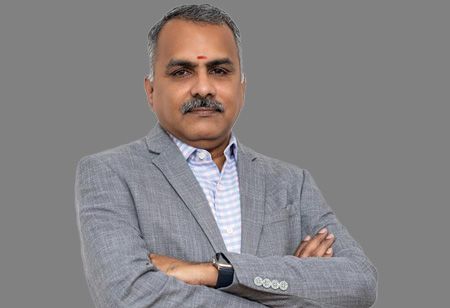

In an interaction with Asia Business Outlook, Sathish Nandagopal, Founder and Director of S Cube Ergonomics Pvt Ltd., the Authorised India Distribution Partner of Humanscale, shares his valuable insights on the future of the Indian Office Furniture Market and the increasing demand for workplace ergonomic products.
New York headquartered Humanscale, the Global Leader in Workplace Ergonomics, has been selling its award-winning ergonomic products that include chairs, sit/stand desks, monitor arms and technology accessories in India through S Cube Ergonomics, via their Exclusive Showroom and Ergonomics Experience Centre in Bengaluru, Hyderabad and Pune with a presence in 15+ multi-branded stores across India.
Here are the excerpts of the interaction with Sathish Nandagopal:
Recent global reports have indicated a steady growth for the Indian Office Furniture Market in the years to come. Your observations?
The Indian office furniture market is poised at a very interesting stage of evolution. Over the last decade, India has transformed from being a cost-conscious market to one that is design-driven, experience-led, and increasingly focused on the well-being of its workforce. This transformation is particularly evident in metros and emerging tier-2 cities where companies are investing in high-performance work environments that foster both productivity and employee satisfaction.
Companies in India are re-designing their workplaces to accommodate flexible and collaborative work environments. How does this impact the key market players?
The shift towards flexible and collaborative work environments has redefined how companies view their physical spaces. The traditional office setup with fixed workstations is rapidly giving way to agile, multi-functional spaces designed to encourage interaction and creativity. For key market players, this represents both a challenge and an opportunity. The challenge lies in innovating fast enough to meet changing work patterns, while the opportunity lies in offering solutions that enhance user adaptability and spatial flexibility.
Also Read: The Immortal Breach: How Old Password Leaks Threaten Businesses


The increased demand for ergonomic solutions such as task chairs, height-adjustable desks, keyboard systems and monitor arms reflects a broader awareness among employees and employers alike about the importance of health and posture at work. The pandemic accelerated this awareness as people experienced musculoskeletal discomfort from working long hours at home in makeshift setups. Today, companies are proactively investing in ergonomics as part of their wellness programs.
Notwithstanding the above, acceptance of ergonomics and premium ergonomic products in India is still a long way to go, primarily due to the high-cost factor. Your thoughts?
Yes, India still faces challenges in terms of widespread acceptance of premium ergonomic solutions. The primary barrier continues to be the perception of high cost. However, this perception is gradually changing. Companies are beginning to view ergonomics not as an expense but as an investment in their most valuable asset: their people. The onus is also on us as industry leaders to educate decision-makers, create awareness, and offer scalable solutions that balance performance with affordability.
Sustainability is emerging as a major driver of the Commercial Office Furniture Market. How do you view this trend?
Sustainability has become another defining force in the industry. Increasingly, architects, designers, and corporate clients are demanding products that are responsibly made, have longer lifespans, and minimise environmental impact. This shift is more than compliance-driven it reflects a moral and social responsibility.
As an organization deeply committed to sustainable practices, we believe that every design decision, material choice, and manufacturing process should contribute to the larger goal of preserving our planet. The Indian market, in particular, is maturing fast in this area, as clients now seek transparent sourcing, circular design, and certifications that validate sustainable performance.
Also Read: Asia’s Next-Gen CFOs: 15 Financial Leaders to Watch in 2026
Finally, the integration of technology in furniture (smart office spaces) seems to be a major trend today. Will this also be a major driver of the market in India?
Technology integration in office furniture is undoubtedly the next frontier. Smart offices equipped with sensor-enabled furniture, data-driven space utilization, and personalised comfort controls are gaining momentum. As we move forward, the convergence of design, technology, and well-being will define the future of the Indian office furniture market and that future looks promising.
link