


Commercial Outdoor Furniture Market Summary
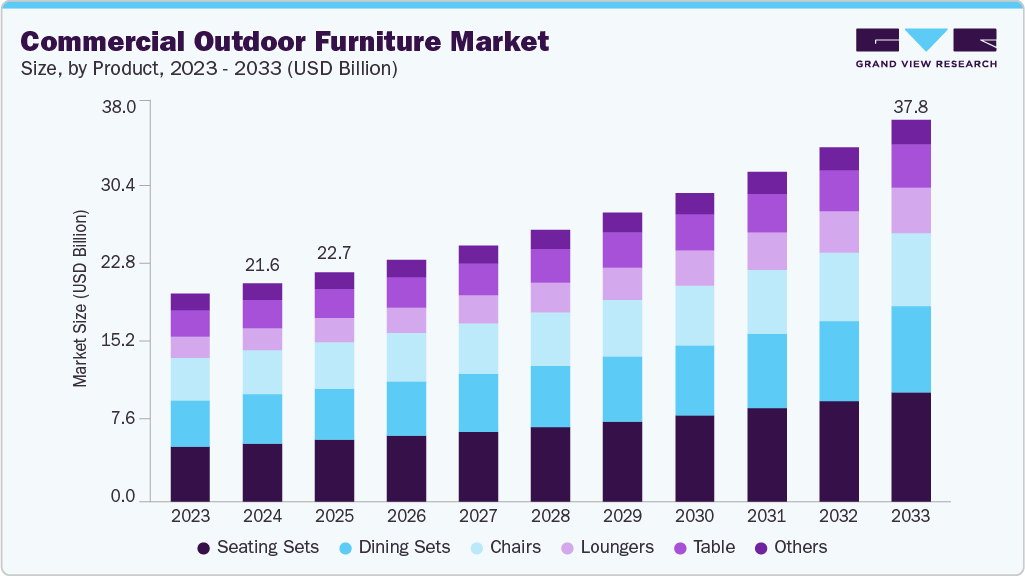
The global commercial outdoor furniture market size was estimated at USD 21.60 billion in 2024 and is projected to reach USD 37.77 billion by 2033, growing at a CAGR of 6.6% from 2025 to 2033. Increasing volumes of commercial construction worldwide are a direct growth lever for the commercial outdoor furniture industry because new hotels, restaurants, malls, office campuses, and mixed-use developments inherently require exterior fit-outs and amenity spaces.
Key Market Trends & Insights
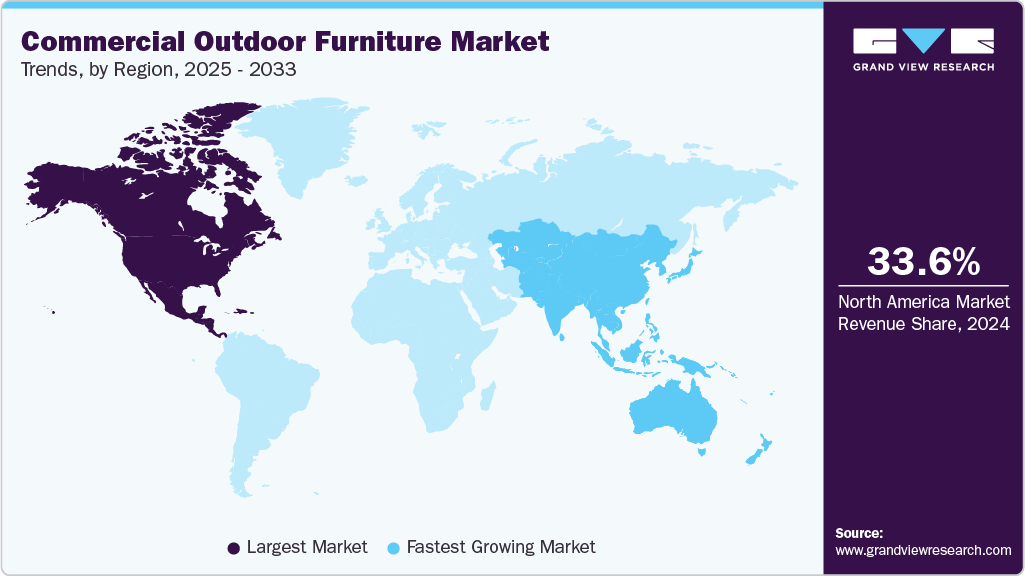
- North America dominated the global commercial outdoor furniture market with the largest revenue share of 33.6% in 2024.
- By product, the seating sets segment led the market with the largest revenue share of 26.7% in 2024.
- By end-use, the hotels & hospitality segment led the market with the largest revenue share of 41.5% in 2024.
- By distribution channel, the direct sales segment led the market with the largest revenue share of 32.8% in 2024.
Market Size & Forecast
- 2024 Market Size: USD 21.60 Billion
- 2033 Projected Market Size: USD 37.77 Billion
- CAGR (2025-2033): 6.6%
- North America: Largest Revenue Share Market in 2024
- Asia Pacific: Fastest Growing in the Market
As developers and operators add terraces, rooftop bars, streetscape retail, plazas, and landscaped courtyards to enhance property appeal and drive higher foot traffic, procurement cycles now include larger budgets for durable, design-forward outdoor dining sets, lounge systems, shade structures, and hard-wearing benches tailored to commercial use. This qualitative shift from treating outdoor areas as peripheral to making them central revenue-generating spaces raises average order values and shortens replacement cycles for commercial-grade furnishings.
The commercial outdoor furniture industry has been considerably impacted by the increase in sports and athletic activities, which has increased consumer demand for customized insoles that improve performance and comfort and help reduce the risk of injury. The popularity and participation in sports and fitness activities have significantly increased over the past few decades. According to the Sports & Fitness Industry Association (SFIA), in 2024, the team sports category shows that there were roughly 8 million more team sports participants in 2023 than in 2022, an 11% increase.

The global hotel construction pipeline (a key subset of commercial construction) reached 15,820 projects representing 2,438,189 rooms in Q4 2024, marking a 4% increase in project count and a 3% increase in rooms year-on-year. In Q2 2025, the pipeline rose further to 15,871 projects/2,436,225 rooms, up 3% by projects and 2% by rooms YoY. These robust growth rates illustrate how commercial building starts are on an upward trajectory, which will drive demand for outdoor furnishings in hospitality and other commercial segments.
Beyond hospitality, the recovery in the tourism sector also stimulates the construction of resorts, outdoor public space amenities, and recreation zones, generating demand for commercial-grade outdoor furniture. For instance, global international tourist arrivals reached 1.4 billion in 2024, an approximate 11% increase over 2023, underlining the rebound of resort and hospitality infrastructure worldwide. As these venues compete for visitor attention, they invest in enhanced outdoor dining, lounge, poolside, and garden seating solutions, again bolstering the outdoor furniture market.
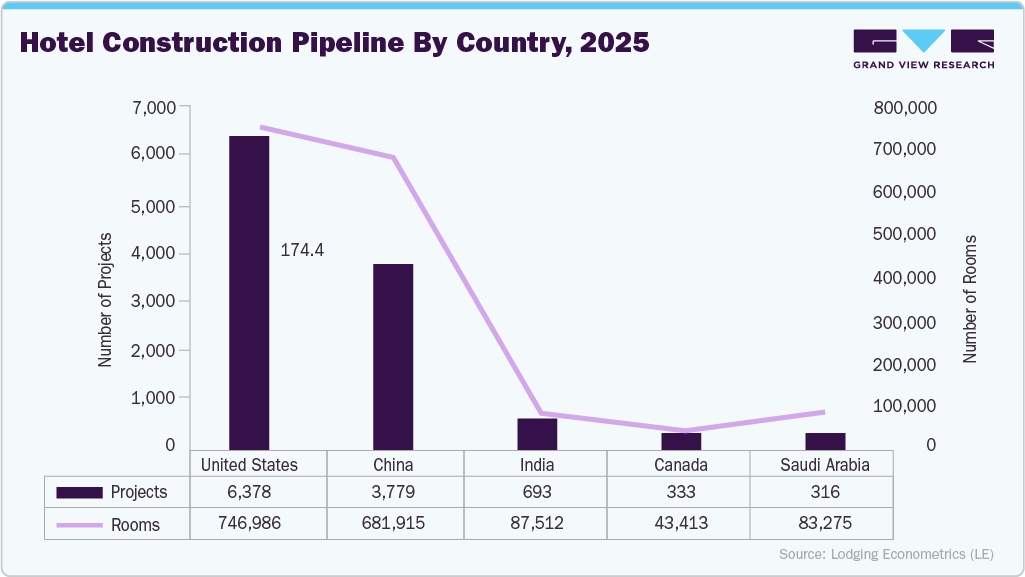
The higher commercial construction starts, especially in hospitality and mixed-use real estate, create predictable, measurable demand uplifts for commercial outdoor furniture through new project outfitting, retrofit waves, and ongoing replacement cycles. The recent year-on-year growth in hotel pipeline projects and rooms provides strong statistical backing, while the qualitative narrative of experience economy, amenity-driven design, and outdoor-space monetization offers the reasoning for why outdoor furniture demand scales with construction activity.
Consumer Insights
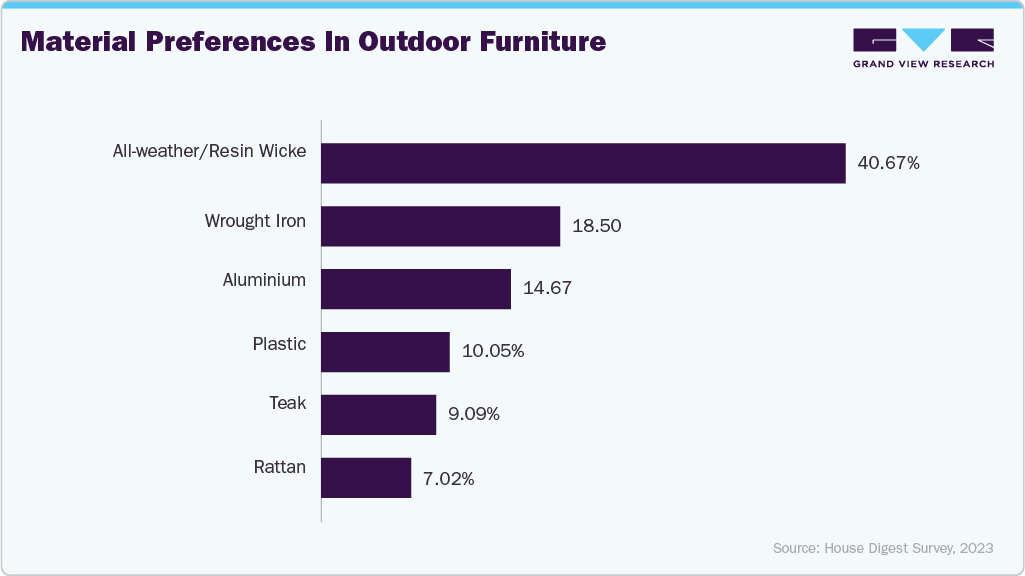
In the commercial outdoor furniture industry, material preferences are heavily influenced by durability, maintenance requirements, and sustainability considerations. Buyers such as hotels, corporate offices, and senior living centers are prioritizing materials that can withstand heavy usage and diverse climatic conditions while aligning with environmental goals. Synthetic and composite materials like high-density polyethylene (HDPE), all-weather resin wicker, and powder-coated aluminum are increasingly preferred due to their UV resistance, corrosion protection, and low maintenance.
A consumer insight reflective of this trend was highlighted in a January 2023 House Digest survey, where 40.67% of 627 participants selected all-weather or resin wicker as their favorite outdoor furniture material, followed by 18.50% choosing wrought iron. Other preferred materials included aluminum (14.67%), plastic (10.05%), teak (9.09%), and rattan (7.02%). While the survey targeted residential consumers, the results mirror broader commercial adoption trends, especially among hospitality and mixed-use projects, emphasizing longevity and aesthetic flexibility.
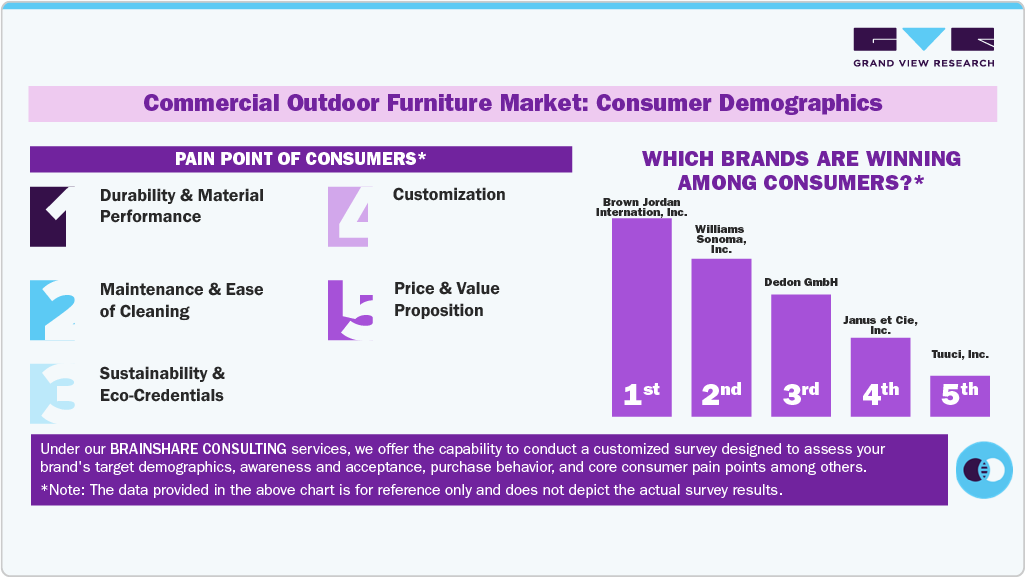
Bulk or volume discounts are a powerful purchase driver in the commercial outdoor furniture industry because large-scale buyers such as hotel chains, resort developers, corporate campuses, senior-living facilities, and multi-family housing complexes need to furnish dozens or hundreds of units at once. By purchasing larger quantities, these buyers reduce unit costs, streamline logistics, and improve project budget efficiency, which in turn increases supplier competitiveness and helps close high-value contracts.
Some manufacturers and wholesalers offer dedicated trade-pricing structures or discount tiers when buyers commit to large orders. For example, Northwood Outdoor, a major supplier offering outdoor poly furniture, reports a 15% discount on wholesale orders above USD 5,000. Another commercial-scale furniture distributor, ‘Topcraft’, states that they provide “bulk order discounts” and customized quotes for large commercial clients, helping them accommodate tighter budgets and faster deployment.
In recent years, sustainable materials such as recycled plastics and responsibly sourced teak have also gained prominence, with buyers increasingly valuing lifecycle performance, recyclability, and environmental certifications (e.g., FSC, GREENGUARD). The market continues to shift toward materials that offer both resilience and sustainability, reflecting evolving buyer expectations and climate-responsive design standards.
Product Insights
The seating sets segment led the market with the largest revenue share of 39.1% in 2024. Commercial seating is increasingly prioritizing comfort and human well-being over purely aesthetic appeal. Restaurants, hotels, and offices are investing in ergonomically designed chairs and sofas that provide proper posture support, cushioning, and breathability. This shift reflects a broader focus on wellness-centered design, where comfort influences customer satisfaction and dwell time. In restaurants or cafés, padded seats and supportive backrests encourage guests to stay longer, directly contributing to higher sales. Similarly, in office or co-working environments, ergonomic designs reduce fatigue and improve productivity. For instance, the Kettal Bitta Lounge modular set is frequently used in resorts and cafés for its rearrangeable seating modules and tables that adapt to various occasions.
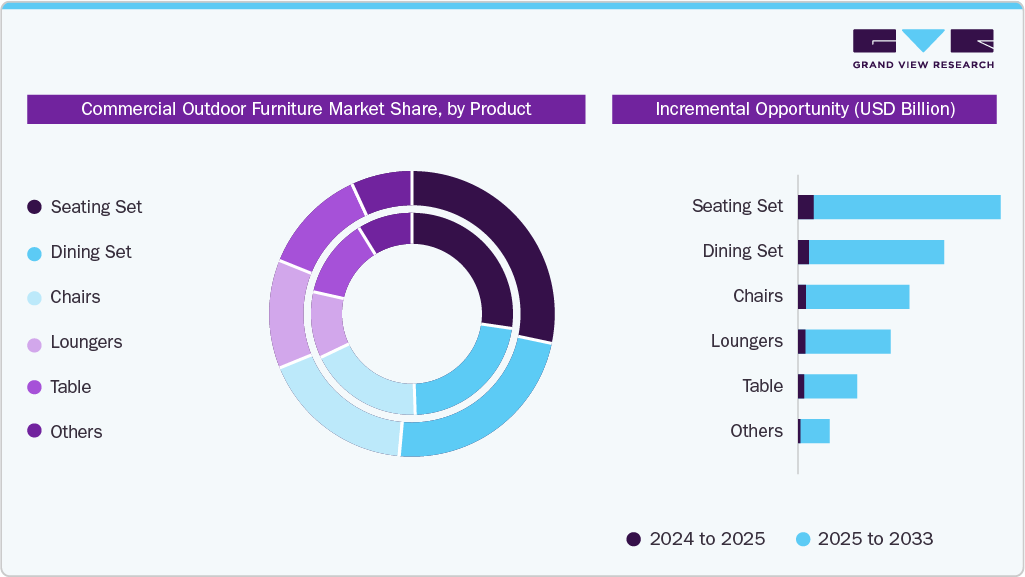
The loungers segment is anticipated to witness at the fastest CAGR of 8.4% from 2025 to 2033. Commercial lounge furniture design is strongly influenced by soft, curved silhouettes and organic shapes that promote comfort and relaxation. Unlike rigid, angular designs of the past, the current trend favors cocoon-like seating that encourages longer stays and creates a sense of intimacy. These designs are particularly popular in hotel lobbies, airport lounges, and hospitality spaces that aim to offer a welcoming environment. For example, Brooklyn Artificial Leather Lounger, Rana Velvet RHS Chaise Loungers, and LivIn Styles’ premium chaise loungers provide soft curves, plush upholstery, and ergonomic contours suited for both corporate and hospitality settings. Beyond aesthetics, curved forms help define semi-private zones without physical partitions, making them ideal for multifunctional commercial spaces such as co-working lounges, boutique hotels, and wellness centers.
End Use Insights
The hotels & hospitality segment led the market with the largest revenue share of 41.5% in 2024. In the hospitality industry, outdoor furniture plays a vital role in creating a relaxing and luxurious environment for guests. Hotels and resorts design open-air lounges, pool decks, and garden patios using comfortable and stylish furniture such as cushioned loungers, hammocks, and rattan sofas. These settings allow guests to unwind, socialize, or simply enjoy the view in a comfortable setting that mirrors indoor luxury. Five-star hotels like Four Seasons Resort Bora Bora use high-end outdoor furniture with soft upholstery and shaded cabanas around the lagoon to offer guests a seamless blend of comfort and scenic beauty, enhancing their overall experience and satisfaction.
The multi-family housing segment is anticipated to witness at the fastest CAGR of 6.9% from 2025 to 2033. Outdoor furniture plays a crucial role in fostering a sense of community within multifamily housing complexes. Shared spaces, such as courtyards, gardens, and rooftops, equipped with comfortable seating, dining sets, and lounge areas, become social hubs where residents can relax and connect. These outdoor zones encourage spontaneous interactions, from morning coffee chats to evening gatherings, helping residents build relationships and a sense of belonging. This communal atmosphere not only enhances social well-being but also contributes to higher tenant satisfaction and long-term retention.
Distribution Channel Insights
The direct sales segment led the market with the largest revenue share of 32.8% in 2024. Direct procurement eliminates intermediaries, allowing organizations such as hotels, offices, schools, and real estate developers to access wholesale rates, bulk discounts, and consistent supply without added markup costs. It also enables greater control over design, materials, and branding, allowing customization that matches the specific functional and aesthetic needs of different environments, such as weather-resistant setups for resorts or ergonomic designs for office terraces. In addition, direct purchasing ensures authenticity, commercial-grade quality, and warranty protection, which are critical for long-term durability and safety in high-traffic spaces.
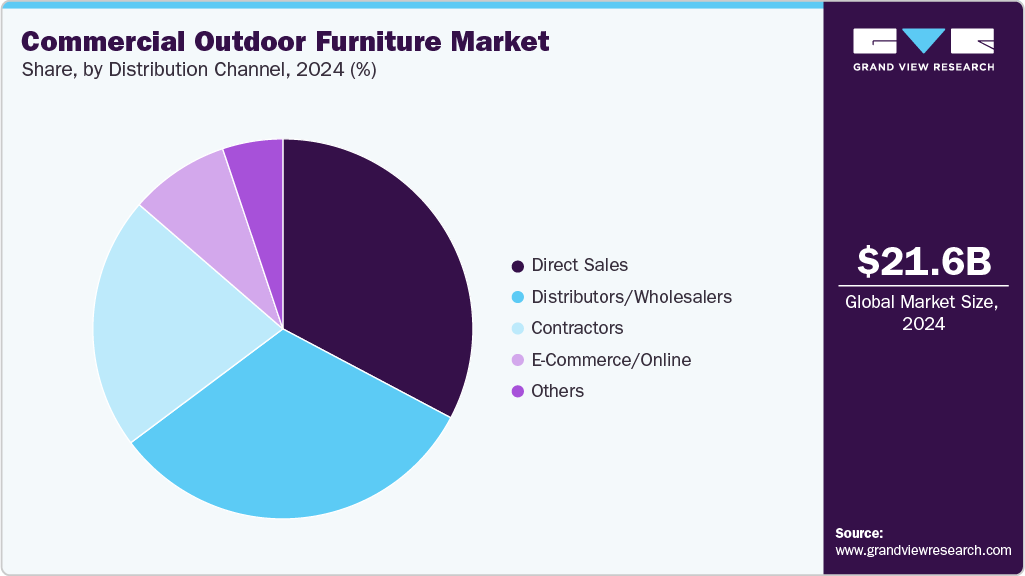
The online/e-commerce segment is anticipated to witness at the fastest CAGR of 8.6% from 2025 to 2033. E-commerce platforms offer B2B buyers a comprehensive selection of outdoor furniture styles, materials, and brands, all in one place. Whether a company is seeking modern aluminum seating for a corporate terrace or durable teak benches for a resort, online platforms offer thousands of options with detailed specifications. This diversity enables businesses to select furniture that aligns with their brand identity, functional requirements, and environmental conditions. Advanced filtering tools allow buyers to narrow options by size, material, weather resistance, or design, making the selection process faster and more accurate than traditional showroom visits.
Regional Insights
North America dominated the global commercial outdoor furniture market with the largest revenue share of 33.6% in 2024. North America’s diverse and often unpredictable climate has a significant influence on commercial outdoor furniture. Constant exposure to elements such as sunlight, rain, snow, and wind compels manufacturers and buyers to prioritize durable, weather-resistant materials like aluminum, treated wood, high-density polyethylene (HDPE), and synthetic rattan. These materials resist rust, fading, and moisture damage, ensuring long-term functionality and aesthetic appeal. Regional climates further shape preferences; coastal and humid areas, such as Florida, favor corrosion-resistant metals and quick-dry fabrics, while colder regions like Canada demand furniture capable of withstanding freezing temperatures without cracking or warping.
Europe Commercial Outdoor Furniture Market Trends
The commercial outdoor furniture market in Europe is expected to grow at a substantial CAGR of 5.6% from 2025 to 2033. Europe’s diverse climate significantly shapes B2B preferences for outdoor furniture. In southern Europe, where countries like Spain, Italy, and Greece experience strong sunlight and salty coastal air, hotels and beachfront cafés often choose powder-coated aluminum or synthetic rattan furniture that resists corrosion and UV damage. For instance, many Mediterranean resorts in Santorini use light-colored, weatherproof aluminum sets to maintain both durability and style under intense sunlight. In contrast, northern European regions, such as Sweden or Germany, which experience rain, snow, and cold winters, favor HDPE (High-Density Polyethylene) and treated acacia or teak wood, as these materials do not crack or warp easily. These climate-based material choices help businesses ensure longevity and reduce annual maintenance expenses.
Asia Pacific Commercial Outdoor Furniture Market Trends
The commercial outdoor furniture market in Asia Pacific is anticipated to grow at the fastest CAGR during the forecast period. In the Asia-Pacific region, material selection for commercial outdoor furniture is heavily influenced by the diverse climate conditions and the need for long-term durability. B2B consumers, such as hotels, restaurants, schools, and corporate offices, prioritize materials that can withstand humidity, heavy rain, strong sunlight, and exposure to coastal salt. Aluminum is a leading choice due to its lightweight nature, corrosion resistance, and low maintenance requirements, making it ideal for humid or coastal locations such as Thailand or the Philippines. Similarly, synthetic rattan and high-density polyethylene (HDPE) are favored for their ability to mimic natural textures while offering superior resistance to moisture, UV rays, and color fading. Teak and other treated hardwoods are preferred in premium projects for their classic appearance and weather endurance, although they require regular maintenance.
Central & South America Commercial Outdoor Furniture Market Trends
The commercial outdoor furniture market in Central & South America is expected to grow at a significant CAGR of 6.2% from 2025 to 2033. In Central and South America, the furniture preferences of B2B buyers vary across sectors based on functionality, aesthetics, and climate resilience. Hotels and resorts located in coastal or tropical regions prioritize premium materials that balance luxury with longevity, such as synthetic rattan, teak, and marine-grade aluminum. These materials can withstand intense sunlight, salt exposure, and humidity while maintaining an upscale look that aligns with the brand image. Cafés and casual dining establishments, particularly in urban centers like São Paulo, Bogotá, or Panama City, often opt for lightweight, cost-effective, and modular furniture options.
Middle East & Africa Commercial Outdoor Furniture Market Trends
The commercial outdoor furniture market in Middle East and Africa is growing at a rapid pace. The extreme and diverse weather conditions across the Middle East and Africa significantly influence material selection for commercial outdoor furniture. In the Gulf region, where temperatures can exceed 45°C and UV radiation is intense, B2B buyers such as hotels, cafés, and resorts prioritize furniture made from UV-stabilized polymers, powder-coated aluminum, and weatherproof fabrics. These materials resist fading, cracking, and heat absorption better than untreated wood or iron. In coastal areas like Dubai, Jeddah, and Cape Town, the high salt content in the air accelerates corrosion, prompting businesses to invest in marine-grade stainless steel, anodized aluminum, and synthetic rattan for longevity. Conversely, in tropical African markets such as Nigeria or Kenya, heavy rainfall and humidity push demand toward moisture-resistant woods, ventilated designs, and quick-dry cushions that prevent mold and mildew.
Key Commercial Outdoor Furniture Company Insights
The commercial outdoor furniture industry remains highly competitive, with brands expanding their presence across hospitality, corporate, public space, and retail channels. Companies are investing heavily in advanced material engineering, weather-resistant coatings, and ergonomic design technologies to improve durability, outdoor performance, and long-term structural integrity. Rising demand for premium, aesthetically appealing, and low-maintenance furniture-driven by hotels, restaurants, resorts, offices, and luxury residential developments-is further accelerating market adoption. In addition, the shift toward sustainable materials, recyclable metals, FSC-certified wood, and eco-friendly manufacturing processes continues to support strong, long-term growth opportunities across the commercial outdoor furniture landscape.
Key Commercial Outdoor Furniture Companies:
The following are the leading companies in the commercial outdoor furniture market. These companies collectively hold the largest market share and dictate industry trends.
- Brown Jordan International, Inc.
- Williams-Sonoma, Inc.
- Dedon GmbH
- Janus et Cie, Inc.
- Tuuci, Inc.
- Kettal S.A.
- Harbor Outdoor
- Gloster Furniture
- Roda S.r.l.
- Caneline S.r.l.
- Varaschin S.r.l.
- Talenti S.r.l.
- EMU S.p.A.
- Nardi S.p.A.
- Royal Botania NV
- Point, S.L.
- Tribù N.V.
- Pedrali S.p.A.
- Danao
- Ethimo S.r.l.
- Gandia Blasco S.A.
Recent Developments
-
In October 2025, IArmen Living is set to make a bold impression at the upcoming High Point Market with the launch of a commercial-grade barstool collection and what the company describes as its largest outdoor furniture offering to date. The new barstool line features eight distinct models, including Baxter, Eunice, and Luther, available in both 26-inch counter height and 30-inch bar height. It spans a wide range of materials and finishes tailored to both residential and commercial environments. Alongside this, Armen Living will introduce four fresh console and bar-table designs, and unveil 20 new outdoor furniture collections for bar, dining, and lounge use, marking a milestone five years after the brand launched its outdoor division in 2019.
-
In July 2025, IAkula Living entered a design partnership with internationally acclaimed interior designer Kelly Hoppen CBE to launch two new outdoor furniture collections named “Fusion” and “Spiral”. These collections juxtapose Hoppen’s refined neutral palette and sculptural forms with Akula’s marine-grade materials, such as olefin rope, powder-coated aluminium, and fast-drain cushions, ensuring both stylish aesthetics and commercial durability. The Fusion line blends mineral-toned rope with white and taupe fabrics atop aged black ceramic tabletops. At the same time, Spiral introduces graphite rope over white ceramics and lighter fabrics for a bolder effect. The collaboration underscores a shared commitment to elegance, functionality, and outdoor design that meets high-performance standards.
-
In August 2025, Shine Outside, the outdoor division of Coated Outdoor Furniture, unveiled a new collection featuring metallic gold and copper finishes for its range of picnic tables, benches, and other outdoor furnishings. The launch brings a contemporary, decorative touch to durable, weather-resistant furniture designed for public and commercial spaces such as parks, schools, and rooftop patios. The new coatings combine long-lasting protection against wear and environmental exposure with an elevated, modern aesthetic that enhances outdoor environments.
Commercial Outdoor Furniture Market Report Scope
|
Report Attribute
|
Details
|
|
Market size value in 2025
|
USD 22.71 billion
|
|
Revenue Forecast in 2033
|
USD 37.77 billion
|
|
Growth rate
|
CAGR of 6.6% from 2025 to 2033
|
|
Base year for estimation
|
2024
|
|
Historical data
|
2021 – 2023
|
|
Forecast period
|
2025 – 2033
|
|
Quantitative units
|
Revenue in USD million/billion, and CAGR from 2025 to 2033
|
|
Report coverage
|
Revenue forecast, company ranking, competitive landscape, growth factors, and trends
|
|
Segments covered
|
Product, end use, distribution channel, region
|
|
Regional scope
|
North America; Europe; Asia Pacific; Central & South America; Middle East & Africa
|
|
Country scope
|
U.S; Canada; Mexico; Germany; UK; France; Italy; Spain; China; Japan; India; Australia & New Zealand; South Korea; Brazil; South Africa
|
|
Key companies profiled
|
Brown Jordan International, Inc.; Williams-Sonoma, Inc.; Dedon GmbH; Janus et Cie, Inc.; Tuuci, Inc.; Kettal S.A.; Harbor Outdoor; Gloster Furniture; Roda S.r.l.; Caneline S.r.l.; Varaschin S.r.l.; Talenti S.r.l.; EMU S.p.A.; Nardi S.p.A.; Royal Botania NV; Point S.L.; Tribù N.V.; Pedrali S.p.A.; Danao; Ethimo S.r.l.; Gandia Blasco S.A.
|
|
Customization scope
|
Free report customization (equivalent up to 8 analysts’ working days) with purchase. Addition or alteration to country, regional & segment scope.
|
|
Pricing and purchase options
|
Avail customized purchase options to meet your exact research needs. Explore purchase options
|
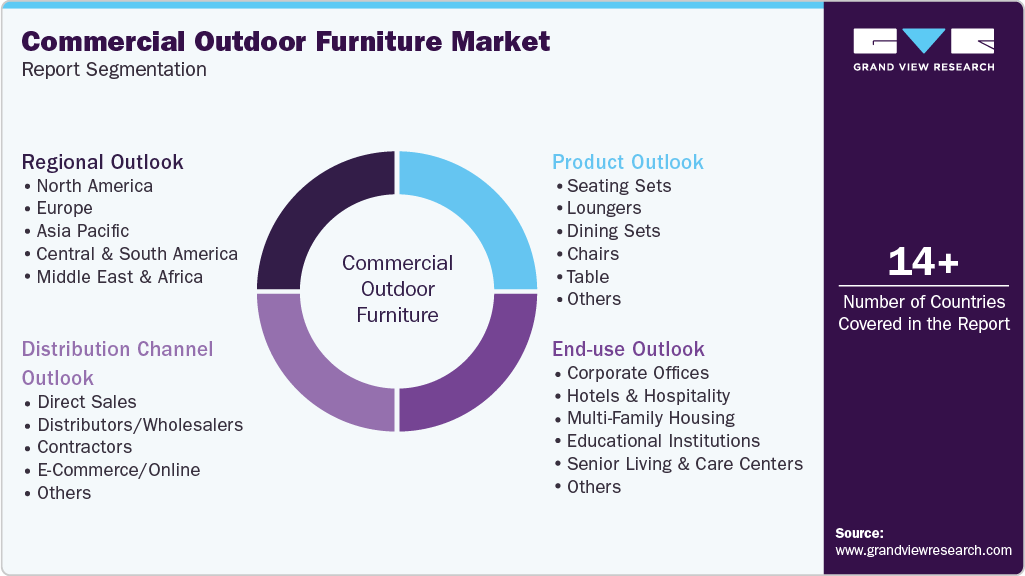
Global Commercial Outdoor Furniture Market Report Segmentation
This report forecasts revenue growth at the global, regional, and country levels and provides an analysis of the latest trends and opportunities in each sub-segment from 2021 to 2033. For this study, Grand View Research has segmented the global commercial outdoor furniture market report based on the product, end use, distribution channel, and region
-
Product Outlook (Revenue, USD Million, 2021 – 2033)
-
Seating Sets
-
Loungers
-
Dining Sets
-
Chairs
-
Table
-
Others
-
-
End Use Outlook (Revenue, USD Million, 2021 – 2033)
-
Distribution Channel Outlook (Revenue, USD Million, 2021 – 2033)
-
Direct Sales
-
Distributors/Wholesalers
-
Contractors
-
E-Commerce/Online
-
Others
-
-
Regional Outlook (Revenue, USD Million, 2021 – 2033)
link